
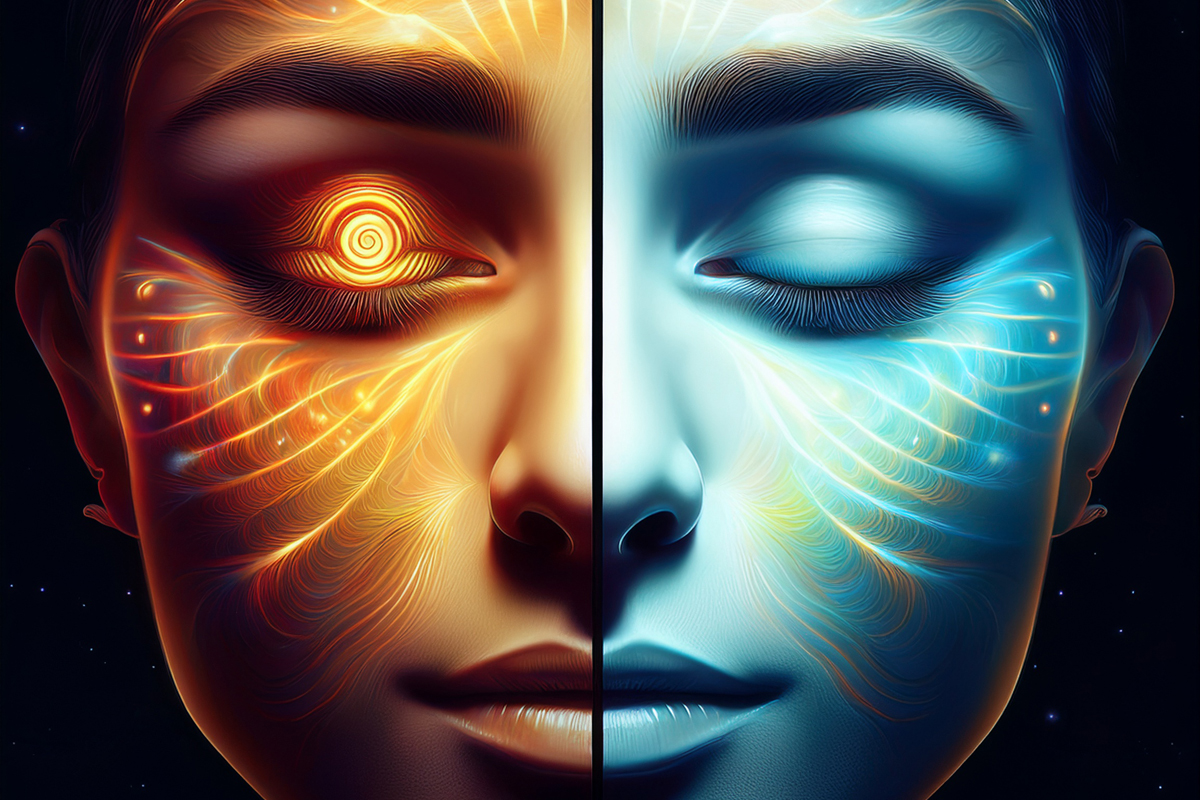
You’ve probably heard that meditation is good for your mental health—and it absolutely is. But did you know that hypnosis might be an even more direct tool for high-performance training?
As a performance psychologist, I’m often asked:
“What’s the difference between hypnosis and meditation? And which one should I use to get results faster?”
Both practices involve focus and relaxation. Both can reduce stress, sharpen attention, and help you become more mindful. But the key difference lies in what you’re trying to achieve.
Meditation: Awareness Without Direction
Meditation is the practice of nonjudgmental awareness. It’s about being present with your thoughts, sensations, and surroundings—without trying to change them.
There are many forms of meditation (mindfulness, mantra, breath awareness, etc.), but they all aim to:
- Quiet the mind
- Improve self-awareness
- Strengthen emotional regulation
- Reduce reactivity and stress
Think of meditation as observation. You’re training yourself to be still, to notice your thoughts without attachment, and to become more aware of your internal state.
Over time, this can lead to a calmer nervous system, improved resilience, and increased focus.
Hypnosis: Intentional Change at the Subconscious Level
Hypnosis, on the other hand, is directive. It’s designed to help you change something—whether that’s a behavior, a habit, a belief, or an emotional pattern.
In a session, a trained professional guides you into a relaxed, focused state (similar to meditation). But instead of just observing your thoughts, we work with your subconscious mind to:
- Rewire limiting beliefs
- Build new habits
- Mentally rehearse success
- Install emotional anchors (e.g., calm under pressure)
- Address specific goals like performance anxiety, procrastination, or confidence
Think of hypnosis as transformation. You’re not just sitting with your thoughts—you’re reshaping them.
The Core Differences at a Glance
Meditation
Passive and observational
Builds mindfulness over time
Focuses on the present moment
Self-directed
Great for stress reduction
Hypnosis
Active and goal-oriented
Creates targeted change quickly
Can revisit past experiences or future goals
Can be guided by a practitioner
Great for performance enhancement
Which One Is Better for Peak Performance?
That depends on your goal.
- If you’re looking to build long-term mental resilience, lower stress, and become more present, meditation is an excellent daily practice.
- If you want to break through a specific barrier, like fear of failure, low confidence, or procrastination, hypnosis offers a more direct path to change.
Many of my high-performing clients use both:
- They meditate daily to build mental discipline
- They use hypnosis (or self-hypnosis) weekly to target specific performance goals
Examples
1. An executive preparing for a high-stakes presentation might meditate to reduce general anxiety and stay grounded—but use hypnosis to practice the speech, rewire fear, and build internal confidence.
2. A tennis player struggling to stay calm under pressure might use meditation between matches to regulate emotion, but hypnosis to mentally rehearse key moments and remove mental blocks around competition.
Self-Hypnosis vs. Guided Hypnosis
Just like meditation, hypnosis can be done solo or with guidance.
- Self-hypnosis involves using scripts or recordings to enter a relaxed, suggestible state and guide your own change
- Guided hypnosis involves working with a trained professional who helps identify your limiting patterns and tailor sessions for your goals
For complex or deeply rooted performance blocks, working with a professional often leads to faster, more lasting results.
Meditation and hypnosis are both powerful tools for building a high-performance mindset. The difference is in how you use them.
Meditation helps you become aware of your internal world.
Hypnosis helps you transform it.
If you’re looking for a fast, effective way to overcome mental barriers and install new performance patterns, hypnosis may be the tool you didn’t know you needed.
And the best part? You don’t have to choose one or the other. In fact, they work beautifully together.
Recent Posts

May is Mental Health Awareness Month
May is Mental Health Awareness Month, but caring for your mental and emotional well-being is not something to think about once a year. It’s something that impacts the way we [...read more...]

The Role of the Subconscious Mind in Achieving Goals
Have you ever set a clear goal—something you really wanted—and yet found yourself not following through? You planned. You visualized. You even bought the planner. But somehow, you still procrastinated. [...read more...]

Hypnosis vs. Meditation – What’s the Difference for Peak Performance?
You’ve probably heard that meditation is good for your mental health—and it absolutely is. But did you know that hypnosis might be an even more direct tool for high-performance training? [...read more...]